Floating shelves are one of my favorite ways to make a room feel finished without making it feel overdecorated. They add storage, display space, and a little visual rhythm to an otherwise forgotten wall. Better yet, floating shelves work in a rental, a first home, a narrow hallway, or the awkward patch of wall above your desk. You do not need a designer budget or a perfectly styled house. You need the right scale, secure hardware, and a plan for what the shelves are actually supposed to do.
I learned this the slightly annoying way in my first apartment. I bought a pair of short white shelves because they were inexpensive, then put them above a sofa that was much wider than they were. The wall looked unfinished, and the shelves looked like two floating punctuation marks. A few measurements and one return later, I understood the most important rule: furniture and wall decor need to relate to each other in size.
Choose the right size and material
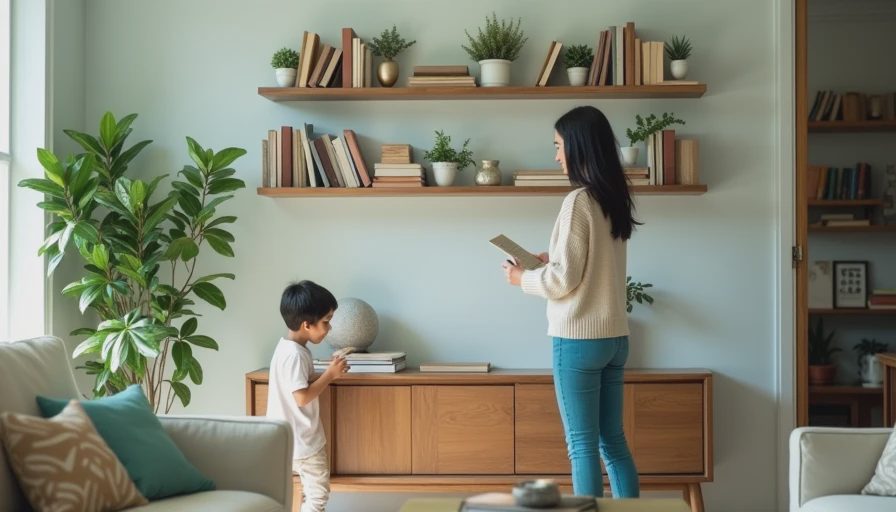
Start by measuring the wall, then measure the furniture below it. Over a sofa, console, or bed, the combined width of your floating shelves should usually cover about two-thirds to three-quarters of the furniture beneath them. That proportion feels intentional without swallowing the room. For a 72-inch sofa, a pair of 30-inch shelves or one shelf around 48 to 60 inches can work beautifully.
Depth matters just as much. A 6-inch shelf is lovely for framed prints, small ceramics, and trailing plants. An 8- to 10-inch shelf gives you room for books and larger objects, but it also projects farther into a walkway. I prefer 8 inches in a living room and 6 inches in a hallway. In my 700-square-foot apartment, every extra inch has to earn its keep.
Wood brings warmth, while painted MDF gives you a cleaner, lighter look. Common choices include pine, oak, walnut, and laminate. A solid walnut shelf can be gorgeous, but a reasonably priced pine shelf stained a medium brown often gives the same cozy effect for much less. IKEA, Home Depot, Lowe's, Target, and Etsy all have useful options at different price points. Look for a concealed bracket rated for the shelf's load, not just a pretty piece of wood.
Hang shelves securely, even in a rental
Before drilling, find the studs with a stud finder and mark them with painter's tape. A shelf holding two paperbacks is one thing; a shelf holding pottery, glass, and a stack of cookbooks is another. If you cannot hit a stud, use anchors designed for your wall type and the expected weight. Drywall anchors, toggle bolts, and plaster-wall hardware are not interchangeable.
For renters, small floating shelves can still be practical, but read the lease and choose hardware carefully. A narrow shelf with lightweight objects creates less risk than a deep shelf loaded with dishes. Keep the holes tidy, save the hardware instructions, and patch everything properly before moving out. I have had good luck taking a photo of the wall before installation so I remember exactly where the studs and wires are.
Most shelves look best when mounted 10 to 12 inches above a sofa or console, though the ceiling height and furniture shape should guide you. Leave enough breathing room to avoid bumping your head, and use a level before tightening every screw. A shelf that is only slightly crooked will look dramatically crooked once you place a frame on it.
Style floating shelves without creating clutter
The easiest styling formula is a mix of tall, low, textured, and personal pieces. Start with the largest item, such as a framed print, vase, or small plant. Add a horizontal stack of two or three books, then place a smaller object beside it. Repeat the pattern with variation rather than lining up identical groups.
Think in layers. Lean one frame against the wall instead of hanging every picture. Place a small bowl in front of a book stack. Let a pothos trail over the edge. The negative space between objects is what lets the display breathe, so do not fill every inch just because you can.
Color is where floating shelves can either tie a room together or make it feel busy. Choose two or three repeating colors from the room: perhaps terracotta from a pillow, cream from the rug, and dark green from a lamp. The objects do not need to match. They only need a quiet relationship. This is how a thrifted brass candlestick and a new ceramic vase can look like they belong together.
For a softer, collected look, mix one sentimental item with practical pieces. My shelves hold a small stoneware bowl from an estate sale, a postcard from a New Jersey hike, and a little amber glass vase. None of them are valuable, but together they tell me where I have been. That matters more than recreating a showroom.
Use them in unexpected rooms
The living room is the obvious spot, but floating shelves can solve small-space problems all over the house. In a kitchen, a pair of sturdy wood shelves can hold everyday mugs, a few bowls, and a jar of wooden spoons. Keep them away from the stove's direct heat and avoid loading them with anything you would hate to drop.
In a bathroom, shelves above the toilet can hold rolled hand towels, a lidded container, and a small plant that tolerates humidity. Choose sealed wood or moisture-resistant material. In a bedroom, a narrow shelf can replace a bulky nightstand when floor space is tight. Mount it high enough to clear your pillow and use it for a lamp, glasses, and one small object.
A home office benefits from a shelf placed above the desk, especially when drawers are limited. Use one shelf for reference books and another for a pinboard, art, or a small calendar. In a hallway, a shallow shelf can display photos without taking up valuable walking space. It is not storage for keys unless you also add a tray; otherwise, everything becomes a tiny pile by Tuesday.
Common mistakes worth avoiding
The first mistake is buying shelves before deciding what they need to hold. Measure your largest book, planter, or frame first. The second is using too many short shelves on one wall. A collection of small shelves can look choppy unless the arrangement has a clear grid or a strong visual center.
Another common problem is matching every object. Identical white frames, identical vases, and identical plants can make a display feel like a store window. Add contrast through height, finish, and texture. Smooth ceramic beside rough wood is more interesting than five smooth ceramics in a row.
Finally, do not ignore the weight limit. A shelf that begins to bow is not charmingly relaxed; it is warning you. Keep heavy books closer to brackets, distribute weight evenly, and periodically check that the hardware has not loosened.
A simple weekend installation plan
On Saturday morning, measure the wall and furniture, choose the shelf length, and sketch the arrangement on paper. Blue painter's tape can create a full-size outline directly on the wall, which is especially helpful when you are deciding between one long shelf and two shorter ones. Price the shelf, brackets, anchors, level, and paint touch-up supplies before ordering.
On installation day, mark the studs, drill carefully, and test the bracket before adding the shelf. Wait until everything is secure before styling. Start with fewer objects than you think you need, live with the arrangement for a day, and add only what improves the balance.
The best floating shelves are not packed with expensive accessories. They hold the things you already love and give them enough room to be seen. Start with what you love. The rest finds its place.