Small front porch ideas can turn an overlooked strip of concrete into the little pause your home has been missing. You do not need a deep porch, a grand staircase, or a generous decorating budget. You need a clear path to the door, one or two useful pieces, and a color story that feels connected to the rest of your home. I have decorated enough narrow rental entries to know that proportion matters more than square footage. Start with what you love. The rest finds its place.
Start with the shape of your porch
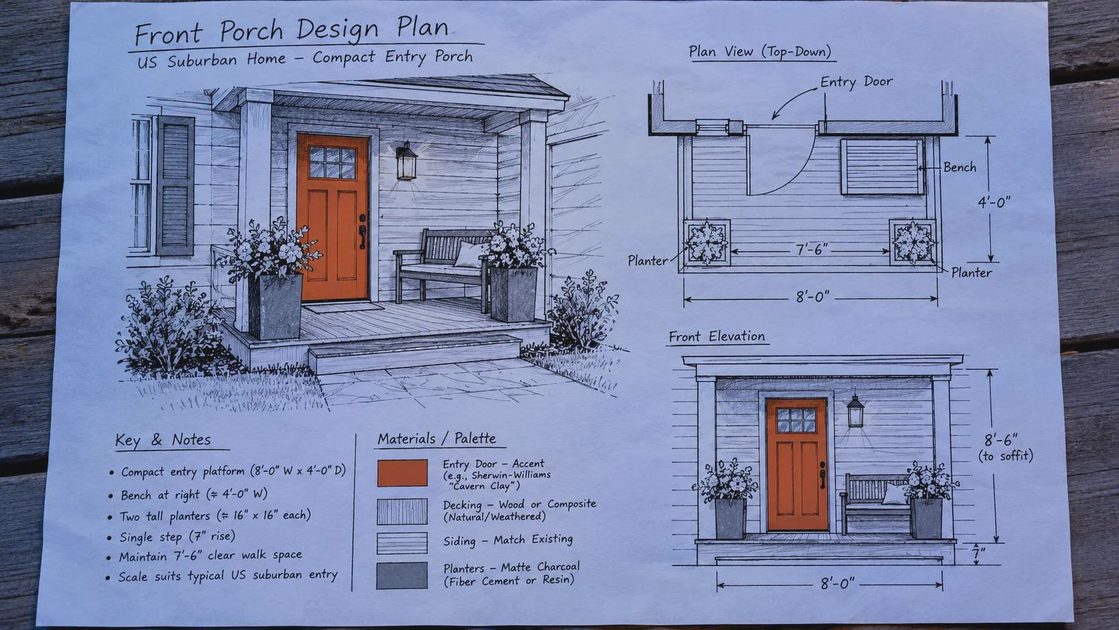
Before buying anything, measure the usable floor area. Write down the width between the railing and the door, the distance the door swings, and the location of steps, outlets, hose bibs, and outdoor lights. A welcome mat that is too large can make a tiny porch feel blocked, while one that is too small looks like an afterthought. For most compact entries, a mat around 18 by 30 inches leaves breathing room without disappearing.
The best small front porch ideas respect negative space, which is simply the empty area that lets the useful pieces stand out. Keep at least 30 inches of clear walking room where possible. If your door opens outward, do not place a chair or planter inside its swing. A quick paper mock-up on the floor can save you from returning a $70 bench that looked perfect online but makes the entrance awkward.
For a narrow porch, think vertically. A tall planter, wall-mounted house numbers, or a slim trellis draws the eye upward instead of filling the floor. Renters can use removable adhesive hooks for a lightweight wreath or seasonal sign, provided the surface and lease allow it.
Choose furniture that earns its place
A small porch usually needs one hardworking piece rather than a matching outdoor set. A 30- to 36-inch-wide bench can provide a spot for removing muddy shoes, but it should be shallow enough to preserve the walkway. Look for a bench between 14 and 18 inches deep, or consider a folding wood stool that can move aside when groceries arrive.
One of my favorite small front porch ideas is a narrow garden stool. Ceramic versions often cost $35 to $80 at home and garden stores, and they can hold a cup of coffee, a small lantern, or a potted fern. They are also easier to move than a full side table. If you want seating, a simple metal bistro chair works better than a bulky Adirondack chair on a tight landing. Choose one with an open frame so the porch still feels visually light.
Use outdoor fabric carefully. A single seat cushion in terracotta, olive, navy, or faded mustard adds personality without requiring a full makeover. Look for solution-dyed acrylic or another fabric labeled for outdoor use, and bring cushions inside during heavy rain. I once left a pretty cotton cushion out during a wet New Jersey week; it smelled like a damp towel by Friday and went straight into the donation bag.
Build a color palette from the house
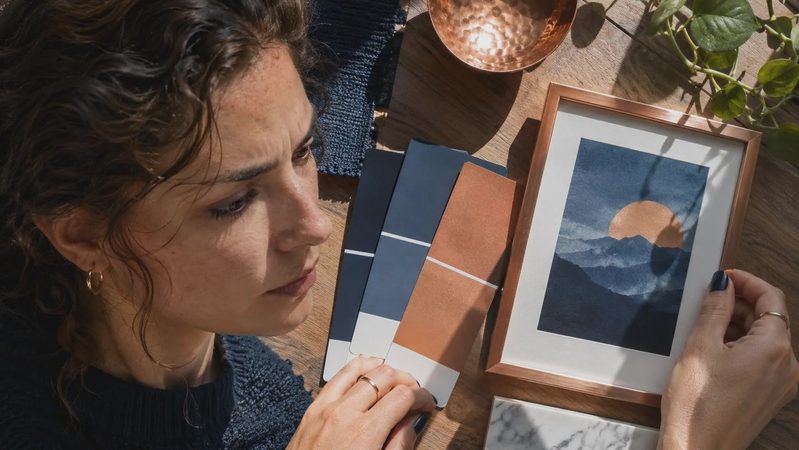
Your porch does not have to match the front door exactly, but it should belong to the same visual family. Start with the fixed colors: siding, brick, stone, trim, and door hardware. Then choose one accent color and one quiet neutral. For example, a blue-gray door can pair with a faded rust cushion and a natural coir mat. A red brick facade looks welcoming with black metal, cream pottery, and leafy green plants.
Repeat a color at least twice so it feels intentional. A navy planter and navy stripe on the mat create more polish than six unrelated bright accessories. This is one reason small front porch ideas often look better when they are edited down. Three strong elements usually beat ten tiny decorations competing for attention.
If you cannot paint because you rent, use color in removable ways: a weather-resistant mat, a painted planter, a seasonal wreath, or a cushion cover. A quart of exterior paint can refresh a small wooden stool for roughly $20 to $35, while peel-and-stick house numbers can give a plain entry more presence for less than $25. Test colors outdoors because daylight can make a sample look much brighter than it did in the store.
Add lighting that feels welcoming
Good lighting is practical, but it also changes the mood of the whole facade. Start with the fixture already mounted beside the door. Cleaning the glass, replacing a yellowed bulb, or choosing a warm white LED around 2700K can make an immediate difference. If the bulb is exposed, a frosted option is usually softer than a clear filament bulb.
For additional small front porch ideas, use one lantern on a step or beside a planter rather than scattering several small lights. Battery-operated LED lanterns are useful for renters and usually cost $15 to $40. Solar path lights can work along a walkway, although they need enough direct sun and may not stay bright through long winter nights. Keep cords away from wet areas and never block the path with a decorative light.
A fixture should suit the scale of the door. An oversized pendant can overwhelm a narrow porch, while a tiny flush mount may look lost above a wide entrance. As a rough visual guide, choose a wall lantern that is about one-quarter to one-third of the door height. The exact measurement matters less than avoiding a fixture that feels either toy-sized or theatrical.
Use plants without creating a jungle
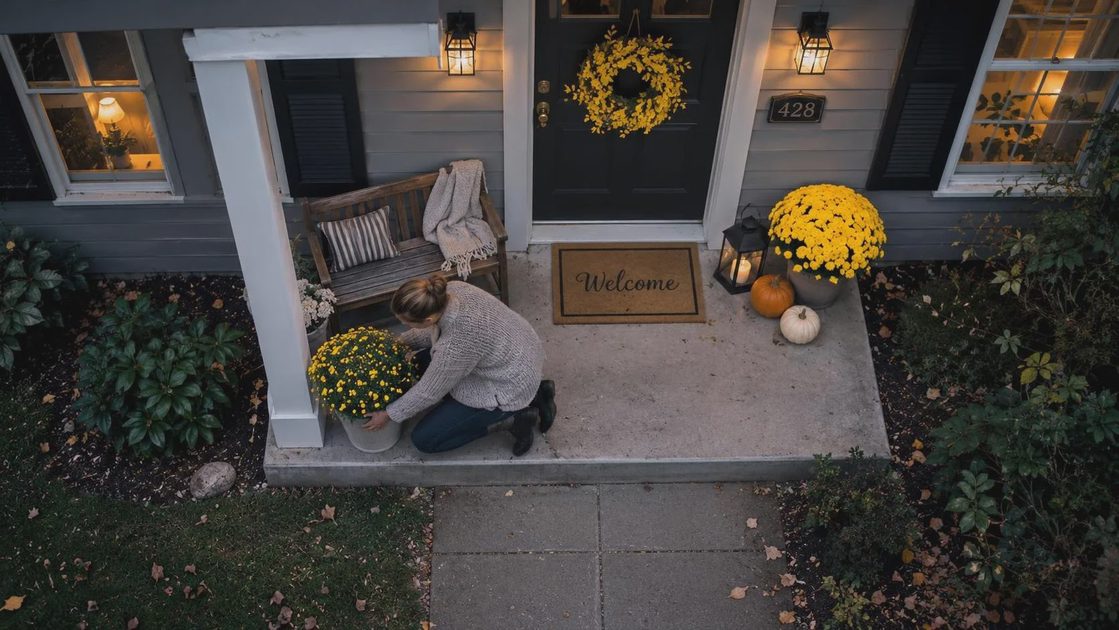
Plants bring softness to hard concrete, brick, and siding, but small porches need restraint. One tall container near the outer corner can frame the door, while a smaller pot near the handle balances the composition. Choose containers with saucers or drainage control so water does not stain the surface or run onto a neighbor's walkway.
Match the plant to the light instead of choosing from a photo. Ferns and caladiums appreciate shade, while lavender, rosemary, and many succulents prefer more sun. In cold climates, a potted plant may need to come indoors before the first hard freeze. Artificial stems can work in a protected spot, but choose realistic foliage and remove dust regularly; shiny plastic leaves are rarely convincing up close.
One of the most dependable small front porch ideas is to use containers with different heights but similar finishes. A tall matte-black planter, a low terracotta pot, and a woven basket can feel collected rather than matchy-matchy. If the porch is only a few feet deep, place plants toward the corners and keep the center open.
Finish with details that feel like you
The final layer should tell visitors something about the people inside. That might be a brass house number, a simple wreath made from dried grasses, a striped mat, or a small seasonal arrangement. Avoid filling every available inch. A porch feels more expensive when each object has room around it.
For affordable small front porch ideas, shop your own home first. A weatherproof basket from the mudroom can hold umbrellas. An old metal plant stand can become a welcome-table substitute. A thrifted ceramic pot can look beautifully intentional after you clean it and add one healthy plant. I have found better porch accessories at estate sales than in specialty stores, especially simple iron brackets and terracotta pots with a little age on them.
Refresh the space in stages: clean the floor, edit damaged items, add the mat, place the largest piece, then bring in color and greenery. Photograph the porch from the sidewalk before deciding what is missing. The view from five feet away is often more useful than standing directly beside the door. Spend first on the item that solves a real problem, then add the pretty things. That is how small front porch ideas become a welcoming entry instead of a crowded display.