If your sofa has started collecting enough fur to qualify as a second pet, you are in good company. I live with Saffron, an orange rescue cat who considers my green velvet sofa, Olive, her personal throne. After one especially fluffy shedding season, I learned how to remove pet hair from couch upholstery without scrubbing it into the weave or making the fabric look tired. The secret is using the right tool for the fabric, working in sections, and preventing tomorrow's fur from undoing today's work.
Start with the fabric, not the hair
Before you reach for a damp sponge, check the manufacturer's cleaning tag. Look beneath a cushion or along the sofa's underside for a code. W means water-based cleaning is allowed, S means use a solvent-based product, WS means either is generally acceptable, and X means vacuuming or professional cleaning only. If the tag is missing, test any method on a hidden area first.
This matters because velvet, linen blends, microfiber, and chenille all behave differently. A rubber glove can be excellent on durable microfiber but rough handling can crush velvet's pile. Sticky tape can lift loose hairs, but repeated pressing may leave adhesive behind. A fabric shaver is for pills, not pet hair, and using one on upholstery can create a bald patch in seconds.
For most couches, gather a vacuum with an upholstery attachment, a rubber squeegee or pet-hair removal brush, a clean white microfiber cloth, and a small lint roller. You do not need a $60 gadget. A $5 rubber glove or a window squeegee from a hardware store often does more than a complicated spinning brush.
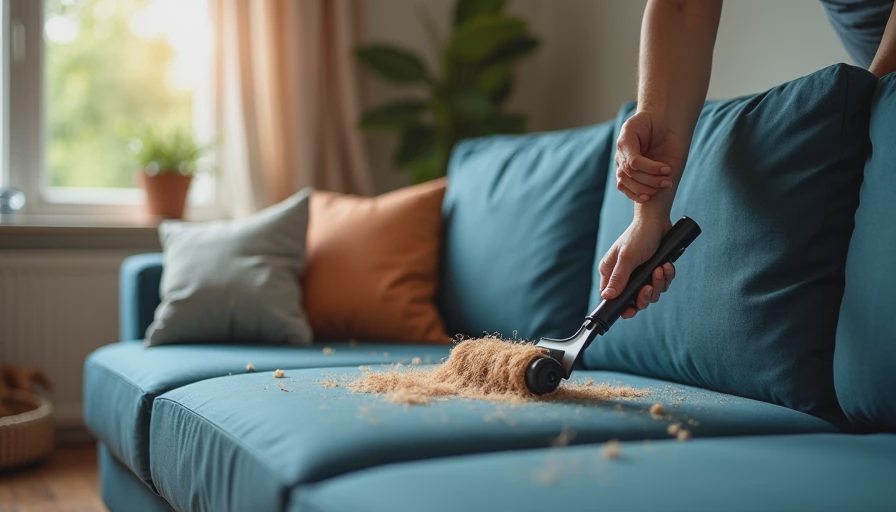
How to remove pet hair from couch cushions
Take off every removable cushion and carry it outside or to a hard floor. Start with the seams, piping, and corners because hair hides there like thread. Use the upholstery attachment in slow, overlapping passes rather than dragging it quickly across the surface. Hold the cushion upright and vacuum both sides, then run the nozzle around the zipper and underside.
Next, use a dry rubber glove. Put it on, lightly dampen the fingertips, and sweep in one direction with short strokes. The hair should gather into small rolls that you can lift away. Do not soak the glove; excess moisture can push hair deeper into woven upholstery and create a musty smell. For a small area, a dry rubber brush works just as well and is easier to rinse.
If you are learning how to remove pet hair from couch fabric with a delicate nap, skip aggressive back-and-forth rubbing. Instead, brush gently in the direction of the fibers, collect the loosened hair by hand, and finish with the vacuum. On velvet, use the lowest practical suction and keep the nozzle slightly above the surface if the attachment catches.
Work on the frame after the cushions are finished. Hair tends to gather where the seat meets the arms, under the front edge, and behind decorative pillows. A crevice tool is useful there, but keep it moving so it does not pull at loose threads.
The best method for stubborn, woven-in fur
When loose vacuuming does not solve the problem, use a slightly damp squeegee or a pet-hair brush designed for upholstery. Pull it toward you in one long motion. You should see a line of fur form across the fabric. Pick up that line before making another pass, or you will simply redistribute the mess.
For microfiber, a clean rubber glove is my favorite low-cost solution. For a tightly woven cotton or performance fabric, a silicone brush is usually faster. For chenille, use gentle strokes and avoid pressing down into the loops. If the hair has been ground in by years of sitting, divide the sofa into sections about the size of a throw pillow. Completing one section properly feels much less overwhelming than attacking the whole couch at once.
Do not spray fabric softener, hair spray, or household cleaner directly onto upholstery to make fur slide off. These products can leave a visible ring, attract more dust, or interfere with the manufacturer's cleaning instructions. If a spot has odor as well as hair, remove the fur first and handle the stain separately with a compatible cleaner.
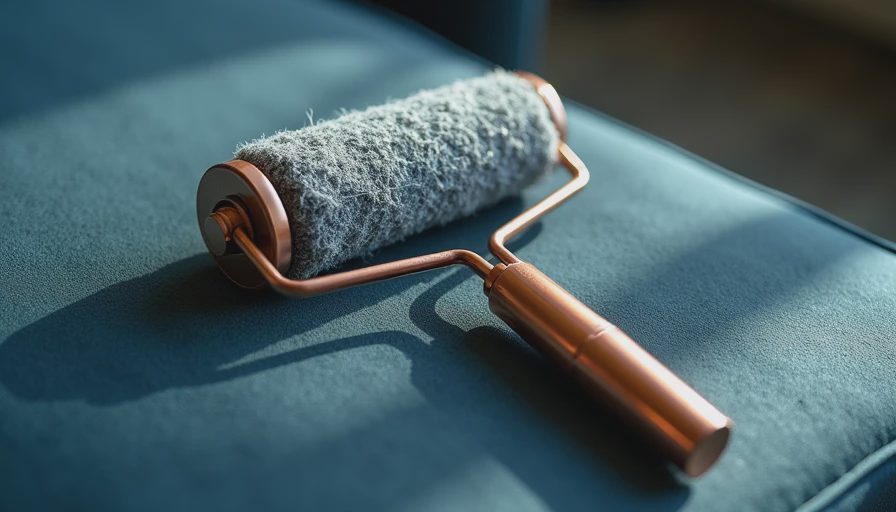
How to remove pet hair from couch without making a bigger mess
The order of operations makes a surprising difference. First remove pillows and blankets. Second vacuum the floor around the sofa, because loose fur will otherwise float back onto the freshly cleaned cushions. Third vacuum the couch, working from top to bottom. Fourth use the rubber tool on remaining hair. Finally, vacuum the floor again.
That sequence prevents the classic mistake of cleaning the couch while a furry throw blanket is still draped over the arm. Wash removable covers according to their care label, and use the dryer only if the label permits it. A short, no-heat tumble before washing can loosen dry fur into the lint trap, but clean the filter afterward. Never put a wet cover back on the cushion; trapped moisture can create odors and encourage mildew.
If your vacuum starts losing suction, stop and empty it. Pet hair fills small canisters quickly, and a clogged filter makes the machine seem useless. Keep a grocery bag nearby for hair balls and clean the brush roll after each deep-cleaning session.
A realistic maintenance routine
The easiest way to remove pet hair from couch upholstery is not waiting until the sofa looks furry. I do a five-minute pass every other evening. I vacuum the seat where Saffron sleeps, swipe the arms with a rubber glove, and shake the throw blanket outside. Once a week, I remove all cushions and clean the seams.
A washable cover placed on the pet's favorite corner can also save time. Choose one that complements the room instead of treating it like an apology. A rust-colored cotton throw can make a green, gray, or cream sofa look intentional, while a thin quilted pad protects the cushion underneath. Wash it weekly or whenever it begins holding an obvious layer of fur.
A covered cat bed beside the couch may redirect some lounging, but do not expect a full miracle. Pets choose spots based on warmth, view, and your company. Put the bed near a window or lamp, add a washable blanket, and reward its use. The goal is less hair on the seating, not a magazine-perfect home that nobody can live in.
When it is time for professional cleaning
If the couch has old stains, a strong odor, water marks, or a fabric marked X, professional upholstery cleaning is the safer choice. Hair removal should happen before the technician arrives because thick fur can clog equipment and hide the areas that need attention. Ask for the cleaning method, drying time, and total price before booking. A small loveseat might cost roughly $100 to $200 in many markets, while a larger sectional can cost considerably more.
For everyday shedding, though, the inexpensive routine wins. Keep a rubber tool in the living room, store the vacuum attachment where you can grab it, and deal with hair before it becomes embedded. Start with what you love. The rest finds its place, even when that place includes a few orange hairs on Olive.