Mid century furniture has a way of making a room feel intentional without making it feel fussy. Think warm walnut, tapered legs, softly curved backs, and enough breathing room for the pieces to look relaxed. If you are decorating your first apartment or trying to move beyond an all-IKEA living room, mid century furniture is a friendly place to start. You do not need a perfect vintage house or a giant budget. You need one piece you genuinely love, a little patience, and a plan for proportion.
I am not an interior designer. I am a designer who could not stop decorating her own apartment and eventually got good at spotting what works. My biggest lesson is simple: start with what you love. The rest finds its place.
What defines mid century furniture?
The mid century period is generally associated with the 1940s through the 1960s, although today's pieces often borrow from that vocabulary rather than copying an original design. Mid century furniture usually favors clean lines over heavy ornament, practical forms over decoration, and natural materials such as walnut, teak, oak, leather, and molded plywood.
Look for details that create a light visual footprint. A credenza on slim legs feels less bulky than a box sitting directly on the floor. A lounge chair with an open wood frame lets the wall color show through. A coffee table with rounded corners is easier to live with in a narrow room than a sharp, oversized rectangle.
The style is not a color scheme. You can pair a walnut cabinet with cream, rust, olive, navy, or even pale pink. What matters most is the relationship between shapes, wood tones, and empty space. That is why mid century furniture can work in a brick rowhouse, a rental with beige carpet, or a newer suburban home.
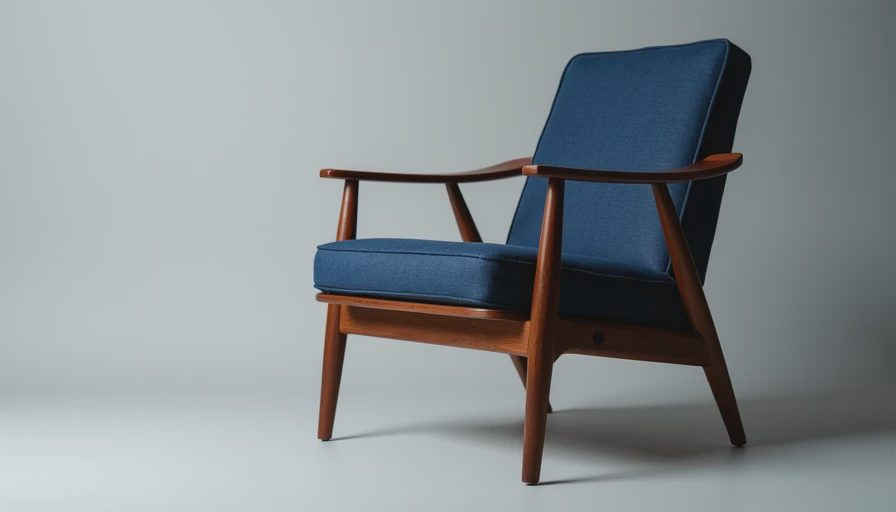
Start with one anchor piece
The fastest way to make a room look like a showroom is to buy an entire matching set. Instead, choose one anchor piece and let it establish the rhythm. In my living room, that piece is Stan, a low walnut coffee table I found for $85 at an estate sale. The finish is imperfect, one corner has a faint water mark, and I still love it more than a flawless table I could have ordered in ten minutes.
A credenza, dining table, lounge chair, or dresser can play the same role. Before shopping, measure the wall, doorway, elevator, and stair turns. A six-foot sideboard is not a bargain if it cannot get through your front door. Leave at least 30 to 36 inches for a comfortable walking path around major furniture, and use painter's tape on the floor to test the footprint.
When the anchor has a strong wood grain, keep nearby pieces quieter. If the main item is colorful upholstery, repeat one small color elsewhere in a pillow, print, or ceramic lamp. Mid century furniture looks collected when the room has connections, not when every object matches.
Where to spend and where to save
Spend more on the item you touch and use every day. A sturdy dining chair, well-built sofa frame, or solid wood dresser earns attention because repairs and replacements add up. For a sofa, check the frame, cushion support, seam quality, and fabric before worrying about whether the legs look perfectly retro. A performance fabric in a textured neutral can handle daily life better than delicate velvet, especially if a cat considers your furniture a personal climbing wall.
Save on accents that are easy to replace. A $25 amber glass vase, a $40 framed print, or a $60 secondhand lamp can provide the period feeling without turning your living room into a museum. Target, Article, West Elm, and IKEA all offer modern pieces influenced by mid century furniture, while estate sales and local resale listings can reveal better values if you know what to inspect.
Do not assume a high price means quality. Look underneath tables for loose joints, swollen particleboard, missing hardware, and veneer lifting at the edges. A $300 cabinet needing professional repair may be less sensible than a clean $120 piece with ordinary scratches.
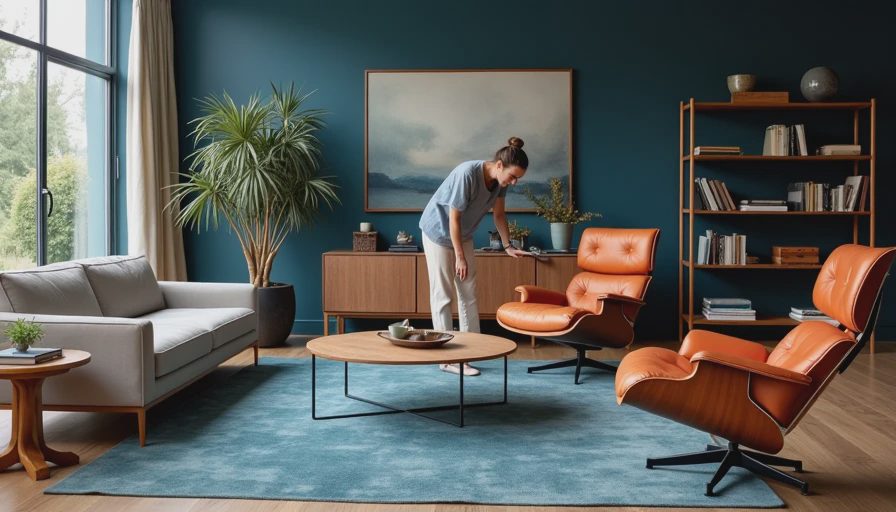
Mixing old, new, and rented-home reality
A room made entirely from vintage finds can feel flat, and a room made entirely from new reproductions can feel too polished. Mix eras through texture. Put a sleek walnut nightstand beside a linen headboard. Pair a vintage dining table with simple black chairs. Add a chunky wool rug under a streamlined sofa so the clean shapes do not become visually cold.
Renters can get the look without painting, drilling, or replacing lighting. Use plug-in sconces with removable hooks, a large art print leaned on a credenza, and curtains hung from tension rods where possible. A warm table lamp can change a white rental more dramatically than an expensive accessory. If your floors are orange-toned oak, choose one wood finish as the bridge and bring in contrast through upholstery instead of trying to match every grain.
This is also where scale matters. A small room does not need tiny furniture; it needs furniture with visible legs and useful proportions. One substantial chair is usually calmer than three little stools competing for attention.
Shopping without making expensive mistakes
Start a note on your phone with the measurements you actually need: maximum sofa width, table height, cabinet depth, and doorway clearance. Add screenshots of pieces you like, then circle repeated features. Maybe you keep saving rounded arms, caramel leather, and brass hardware. That pattern is more useful than a vague label such as “mid century furniture.”
For secondhand shopping, bring a tape measure, flashlight, felt pads, and a friend with a vehicle if the item is large. Smell the drawers, open every door, and check the back panel. Musty odor, fresh paint over damaged veneer, or drawers that drag can turn a charming find into a weekend project. Ask whether the seller knows the age and history, but treat a confident description as information, not proof.
For online shopping, read the dimensions instead of trusting staged photos. A chair shown beside a large room can look normal while being surprisingly low or narrow. Reviews often reveal whether assembly is frustrating, fabric pills, or the color differs from the product photograph. Save shipping charges in your budget; a $90 table with $75 freight is a $165 table.
A simple room plan that works
Begin with the largest practical item, usually the sofa, bed, or dining table. Place it first, then add a rug large enough for at least the front legs of nearby seating. Next, add a storage piece at a different height. This creates visual hierarchy: low seating, medium table, taller lamp or art. Finally, use accessories in groups of three with varied heights, such as a book stack, a small bowl, and a leafy branch.
For a living room budget of $1,200, I would rather see $500 go toward a comfortable secondhand sofa, $220 toward a rug, $180 toward a used wood table, $120 toward lighting, and the remaining $180 spread across pillows, art, and delivery. That mix will feel more personal than spending the full amount on one fashionable chair.
Give the room a week before buying the final accessories. Live with the empty corners. Notice where you drop keys, where sunlight lands, and whether the coffee table blocks the walkway. Good mid century furniture supports your routines; it does not require you to perform a lifestyle for a photograph.
Questions to ask before you buy
Will this piece solve a real problem, or am I buying it because the listing photo is beautiful? Can I carry, clean, and repair it? Does its height make sense beside what I already own? If I move next year, could it work in another room? Those questions have saved me from more bad purchases than any mood board.
Also give yourself permission to mix in things that are not mid century furniture. A handmade ceramic bowl, a contemporary poster, a striped cotton throw, or a sentimental lamp can keep the room from feeling themed. Your home should show your life, not a decade recreated under glass.
The best rooms are edited slowly. Buy the useful thing, wait for the right color, and leave some negative space around your favorite piece. Mid century furniture can provide the structure, but your books, art, plants, and slightly wonky thrift-store finds provide the personality. Start with what you love. The rest finds its place.