A console table behind couch can do more than fill an awkward strip of floor. It can define the living area, give a lamp a home, hide a charging cord, and make a sofa look deliberately placed instead of abandoned in the middle of the room. I learned this after moving my green velvet sofa, Olive, away from the wall in my 700-square-foot apartment. The room immediately felt more grown-up, but only after I stopped treating the table like a dumping ground.
The trick is proportion. You want a narrow piece that adds structure without creating a shin hazard. Before shopping, measure the sofa, the walking paths, and the distance between furniture. A few minutes with painter's tape can prevent a very annoying return.
Start with measurements, not a shopping cart
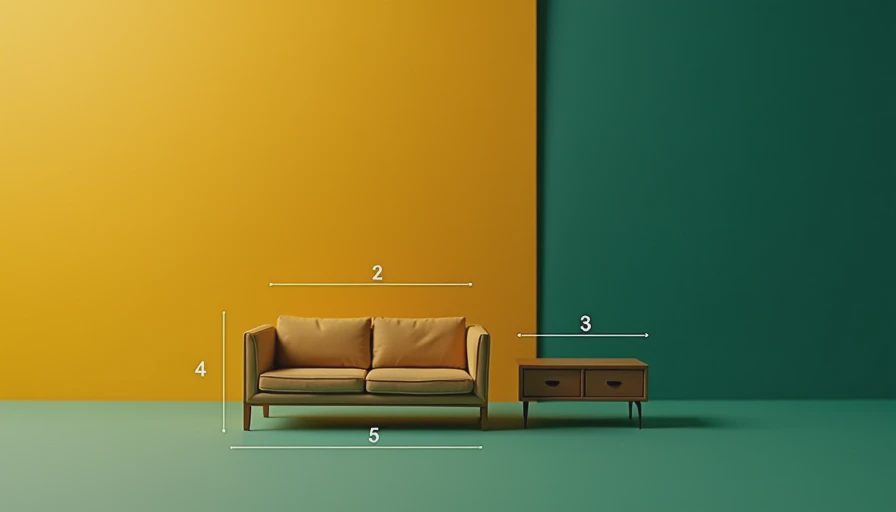
For most rooms, a console table behind couch should be slightly lower than the sofa back or close to the same height. A table around 28 to 32 inches tall usually works with a standard sofa, though the right number depends on your furniture. If the top rises several inches above the sofa, the arrangement can look top-heavy. If it disappears below the cushions, it may feel accidental.
Depth matters even more in a small living room. Look for a table between 10 and 14 inches deep if people walk behind the sofa. A 16-inch table can work in a generous room, but it quickly steals clearance in an apartment. Leave roughly 30 to 36 inches for a comfortable walkway, and do not forget that baskets, lamp cords, and decorative objects extend beyond the tabletop.
Measure the sofa length too. A table that is six inches shorter on each side often looks polished. One that ends dramatically before the arm can make the sofa appear oversized. If you find a beautiful secondhand table that is too long, test it in place with cardboard before committing.

Choose the right shape for your room
A rectangular table is the easiest choice because it echoes the sofa's long horizontal line. That repeated shape creates visual rhythm, especially when the sofa floats in an open-plan living room. Look for simple legs and an open lower shelf if the space feels crowded. Solid side panels and chunky drawers can make a narrow room feel boxed in.
A console table behind couch can also be round-ended, curved, or made from a slim metal frame. Curved corners are useful when the walkway is tight because there is less of a sharp edge to catch a hip. A waterfall-style table, with one continuous slab bending from top to leg, feels clean and modern. A wood top with black legs can bridge a warm vintage coffee table and cooler lighting without making the room look like a matching furniture set.
For renters, a modest table from Target, IKEA, or a local thrift shop can be a smart starting point. I once found a scratched oak piece for $35, sanded the roughest areas, and covered the top with a removable runner. It was not perfect, but it looked more personal than the $220 table I had nearly ordered online.
Build a useful styling layer
Think of the tabletop as a visual sentence with a beginning, middle, and end. A lamp can act as the tallest element, a stack of books can provide the middle, and a low bowl or small plant can finish the composition. Leave empty space between these objects. Negative space is not wasted space; it keeps the arrangement from looking like a yard sale.
If the console table behind couch sits in the center of the room, use the surface for things you actually reach for. A shallow tray can hold keys, a candle, and a remote. A ceramic bowl can collect loose change. A small rechargeable lamp avoids a cord running across the floor, while a power strip mounted underneath can keep phone chargers organized.
Choose objects that connect to the rest of your palette. A rust-colored vase can pick up a pillow, while a framed print can repeat the cream in the rug. You do not need every item to match. Repeating one color twice is usually enough to make unrelated finds feel intentional.
Make the back of the sofa look finished
The back of a sofa is often the least attractive view in the room, particularly when the upholstery is plain gray or beige. A console gives you a chance to create a backdrop without hanging anything on the wall. A pair of lamps can frame the sofa, but matching lamps are not required. Two similar heights with different shades can feel collected rather than showroom-perfect.
A large basket under the console adds texture and useful storage for throws. Just keep it far enough from the walkway that nobody catches a shoe on it. A low row of books, a lidded box, or one substantial pottery piece can also fill the lower shelf without turning it into a storage closet.
A console table behind couch should support the sofa, not compete with it. If the upholstery already has a bold pattern, use quieter accessories. If the sofa is plain, this is where you can bring in a striped lamp shade, colorful art, or a sculptural secondhand object.
Solve the practical problems before they become annoying
Safety and circulation are part of good design. Use felt pads under the legs if the table sits on hardwood, and secure a tall lamp so a pet or guest cannot easily knock it over. Saffron, my orange rescue cat, once treated a dangling lamp cord as a personal invitation. I now route cords behind a table leg and fasten them with discreet clips.
If the sofa moves when someone leans against it, a narrow table can shift too. Rubber furniture grippers beneath the sofa legs help, and they are usually inexpensive. Avoid pushing the console tightly against the sofa unless the construction allows it; a small gap makes cleaning easier and prevents the wood from rubbing against upholstery.
For a console table behind couch near a doorway, tape the intended footprint for a full day. Walk past it carrying laundry, groceries, or a mug. That little test tells you more than a staged product photograph. If you keep bumping the corners, choose a shallower table or move the sofa closer to a wall.
Budget ideas that still look considered
A new console can cost anywhere from about $80 for a basic engineered-wood model to $500 or more for a solid-wood piece. You do not need the expensive option. Search estate sales for narrow desks, sofa tables, library tables, or even unfinished shelves with hairpin legs. A 48-inch tabletop can become a console with two simple brackets, provided it is properly anchored and does not obstruct the walkway.
For a console table behind couch on a tight budget, prioritize the silhouette and the finish you can live with. Paint is useful, but do not paint over a beautiful wood surface simply because the current stain is dated. Sometimes a thorough cleaning, new drawer pulls, and a $12 lamp shade are all the makeover requires.
My favorite approach is to spend on one anchor item and thrift the rest. A good lamp makes a cheap table feel intentional. A large plant can soften straight lines. A framed print from a local art fair gives the arrangement personality without requiring a full gallery wall.
The finishing check
Stand at the room entrance and look at the sofa from several angles. Does the table create a clear boundary, or does it make the walkway feel narrow? Are the tallest objects balanced from left to right? Can you clean underneath it? Is there somewhere to set a drink without knocking over a vase?
If the arrangement feels busy, remove one item before buying another. If it feels flat, add height through lighting or a framed piece rather than piling on tiny decorations. The best console table behind couch is the one that makes the room easier to use and more like you—not the one that earns the most likes in a perfectly staged photograph.
Start with what you love. The rest finds its place.