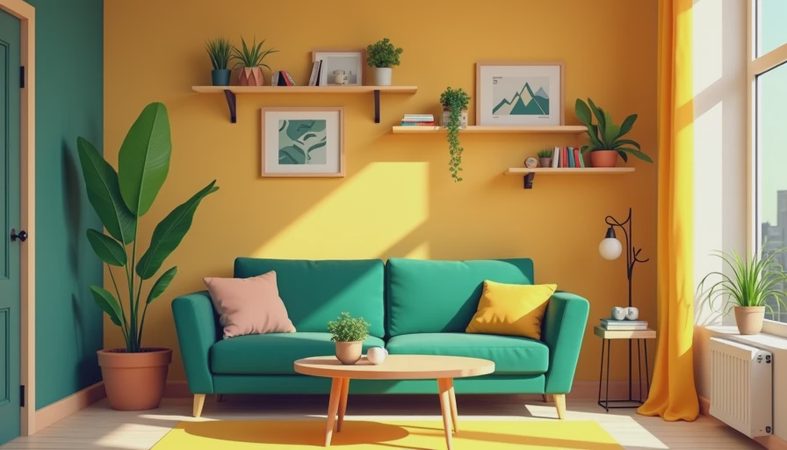
A boho living room should feel like someone interesting lives there. Not like you ordered every item from the same twelve-piece collection, and not like a staged rental where nobody is allowed to put down a coffee mug. The look is layered, relaxed, colorful, and personal. It makes room for the thrifted vase, the slightly wonky basket, and the blanket your grandmother gave you. Start with what you love. The rest finds its place.
What actually makes a room feel boho
“Boho” is less about buying a particular style of furniture and more about combining things with different histories and textures. Think a linen sofa beside a carved wood table, a faded Persian-style rug under a modern floor lamp, and art that does not match perfectly but shares a color or mood.
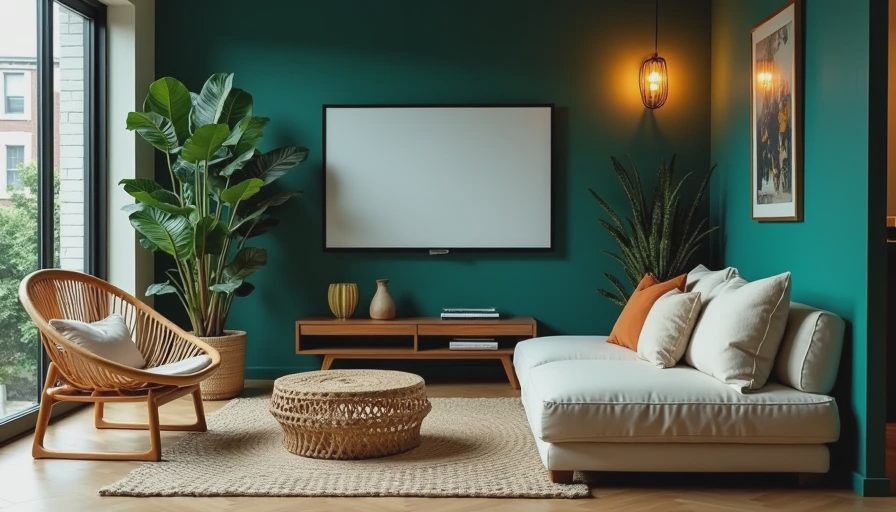
A successful boho living room usually has five ingredients: a warm base color, several natural textures, one or two strong accent colors, low-pressure seating, and objects that tell a story. Rattan, jute, cotton, cane, leather, wool, terracotta, and unfinished wood all help. You do not need every material at once. A jute rug, woven basket, and linen curtains can provide plenty of texture in a small apartment.
Color does not have to mean bright orange walls. Start with cream, oatmeal, warm white, camel, or soft clay. Then add rust, olive, mustard, dusty rose, or deep teal through pillows, art, and smaller pieces. I like choosing one dominant color, one supporting color, and a neutral background. That simple formula keeps a collected room from becoming visual soup.

Build the room around one anchor piece
Before shopping for accessories, choose the item that will carry the room. This might be a sofa, a vintage rug, a large piece of art, or even a pair of curtains you found on sale. In my apartment, the anchor is Olive, a velvet green sofa I bought secondhand after measuring the doorway three separate times. She was worth the spreadsheet.
If your sofa is neutral, let the rug or artwork bring personality. If the rug is busy, keep the larger upholstery quiet. A 5-by-8-foot rug often works in a compact seating area, while an 8-by-10-foot rug gives a larger room more breathing room. Ideally, at least the front legs of your sofa and chairs sit on the rug. A tiny rug floating in the middle of the room makes everything around it look disconnected.
For renters, the anchor can be removable: a dramatic rug, peel-and-stick wallpaper on one small wall, oversized art, or curtains hung high and wide with tension hardware where appropriate. You can make a room feel intentional without painting a single wall.
Layer texture without buying a hundred pillows
Texture is what makes a boho living room feel comfortable rather than merely colorful. The trick is to vary the surface of larger pieces first. Pair a smooth coffee table with a nubby rug, a woven pendant, and a soft throw. Add one boucle or velvet pillow to a cotton sofa, then stop and look at the room before buying five more.
A useful shopping rule is to create three levels of texture. First, use a foundation such as a rug, curtains, or upholstered seating. Second, add practical layers like baskets, a throw, or a fabric ottoman. Third, bring in small accents such as ceramic vessels, carved wood, and books. This gives your eye somewhere to travel.
I once bought six patterned pillows because they looked charming in a product photo. On my sofa, they looked like a very polite argument. I returned four and kept the two with the strongest color relationship. The lesson was not “buy fewer things” in the abstract. It was to repeat a color thoughtfully instead of collecting patterns at random.
Choose furniture with relaxed proportions
Boho furniture tends to look better when it is comfortable and slightly informal. Look for rounded arms, visible wood, low profiles, woven details, or upholstery that invites you to sit down. You do not need a matching sofa and loveseat. A sofa plus a thrifted wood chair, floor cushion, or small bench can feel more natural and often costs less.
Pay attention to scale. A huge sectional can overwhelm a 700-square-foot apartment, while a collection of tiny chairs can make a larger room feel unfinished. Measure the wall, the walking path, and the clearance around the coffee table before purchasing. Leave roughly 16 to 18 inches between a sofa and coffee table for comfortable movement, then adjust for your actual space.
For a budget-friendly boho living room, search Facebook Marketplace, estate sales, Habitat for Humanity ReStore locations, and local thrift shops for tables and cabinets. A dated wood table can become useful again with cleaning, new hardware, or a light sanding. Be cautious with upholstered items: inspect seams, odors, pet damage, and signs of pests before bringing anything home.
Make the walls personal, not perfectly symmetrical
A gallery wall is a natural fit for a boho living room, but it does not need to look like a showroom grid. Mix a small painting, a textile, a postcard, a mirror, and a photograph. The unifying element might be a shared frame color, a repeated shade, or simply the fact that every piece means something to you.
Lay everything on the floor before making holes. Start with the largest piece, place smaller items around it, and leave enough space for the group to read as one composition. If you rent, use lightweight frames, picture-hanging strips within their weight limits, or a picture ledge. Leaning art on a console is another easy option, especially if you like changing the room with the seasons.
Plants add height and softness, but you do not need a jungle. One tall plant beside a sofa and a small trailing plant on a shelf can be enough. Choose varieties that suit the light you actually have, not the light in the inspirational photo. Saffron, my orange rescue cat, has taught me that low plant stands and dangling leaves are invitations, not decorations.
A realistic budget for the transformation
You can create a convincing boho living room in stages. With $150 to $250, start with a washable rug or runner, two pillow covers, a secondhand basket, and one lamp. Around $500 to $900, you can add a larger rug, curtains, a coffee table, and several framed pieces. A full refresh with a sofa, rug, lighting, and accessories can easily reach $1,500 or more, so there is no prize for doing it all in one weekend.
Spend more on the things your body uses every day, especially the sofa and primary chair. Save on decorative pillows, baskets, small tables, and art that can be swapped later. Pillow covers are particularly useful because a $12 to $25 cover can change the season without storing an entire collection of cushions.
Before buying, take a photo of your room and make a short list: one foundation item, one light source, one texture, and one personal object. That list protects you from buying another attractive vase when your seating area still needs a lamp.
The final edit that makes everything click
When your boho living room is nearly finished, remove five things. Not because minimalism is morally superior, but because negative space lets your favorite pieces matter. Clear one corner, separate objects that are all the same height, and move at least one item away from the wall. Small edits often do more than another shopping trip.
Then sit in the room at different times of day. Notice whether the lamp is useful, whether the rug feels good underfoot, and whether you can set down a drink without reaching across the whole sofa. A beautiful room still has to support ordinary life.
The best boho living room is not a checklist of rattan, plants, and patterned pillows. It is a room with rhythm: quiet areas beside busy ones, soft textures beside hard surfaces, and useful things mixed with sentimental ones. Let the process take a little time. Start with what you love. The rest finds its place.