The best couches for small spaces do more than fit through a narrow doorway. They give you somewhere to stretch out, make a rental feel personal, and leave enough negative space for the room to breathe. I learned this after buying a sofa that looked perfectly reasonable online and somehow made my 700-square-foot apartment feel like a waiting room. The couch was not bad. It was simply too deep, too bulky, and completely wrong for the proportions of the room.
If your living room is small, you do not need to settle for a stiff loveseat or a piece of furniture that looks like it belongs in a dorm. You need the right measurements, visual weight, and everyday comfort. Start with what you love. The rest finds its place.
Measure the room before you fall in love
Before browsing velvet colors or saving ten Pinterest photos, measure the room. Write down the wall length, ceiling height, door widths, hallway turns, and the distance between the sofa wall and nearby furniture. A couch that is 84 inches wide may technically fit along a 90-inch wall, but six inches of leftover space will look tight once you add an end table or floor lamp.
For most compact living rooms, a sofa between 68 and 78 inches wide is a useful starting range. Depth matters just as much. A standard sofa can be 36 to 40 inches deep, while a compact version may be closer to 30 to 34 inches. That difference creates a surprising amount of walking space. I prefer at least 24 inches for a clear path through a living room, although your layout can work with less if the route is not a main walkway.
Do not forget delivery. Measure the entry door, stairwell, elevator, and the tightest corner inside your home. A flat-pack sofa from Burrow or IKEA can solve an awkward delivery problem, while a fully assembled vintage sofa may require more planning. Make a cardboard rectangle in the sofa's footprint and leave it on the floor for a day. You will notice traffic problems immediately.
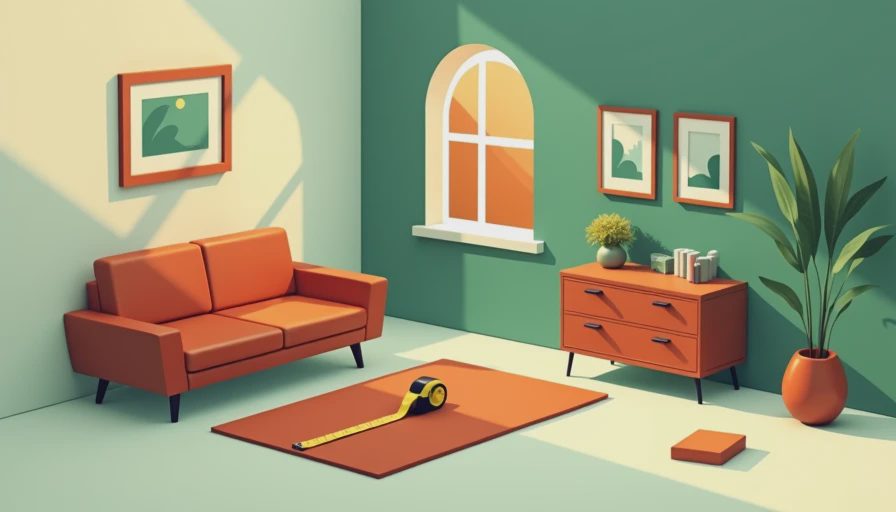
Choose a shape that leaves visual breathing room
The shape of a sofa changes how large it feels. For couches for small spaces, exposed legs are one of my favorite tricks because they reveal more floor underneath. That visible floor creates a lighter silhouette than a skirted or fully upholstered base. Slim arms also help. A three-inch arm can offer nearly a foot more seating width than a chunky eight-inch arm on the same overall sofa.
A compact apartment sofa with two or three seat cushions usually looks more intentional than an oversized sectional forced against one wall. If you need extra lounging room, consider a chaise only when the room's traffic pattern supports it. A reversible chaise can be practical in a rental because you can switch the orientation after moving, but measure the chaise projection carefully. It can easily block a balcony door or make a coffee table impossible to reach.
Curved sofas are beautiful and can soften a boxy room, but their widest point is not always obvious online. They also tend to lose usable wall space behind them. A clean, gently rounded loveseat often gives you the look without sacrificing as much floor area.
Make comfort do more than one job
A small sofa should work hard. Look for a seat depth that supports your preferred position: around 20 to 22 inches of usable cushion depth for upright sitting, or more if you like curling up with a book. Removable cushions are helpful because they can be flipped, vacuumed, and eventually re-covered. Bench cushions look polished, but they can show wrinkles and require regular fluffing.
If you have a cat, a dog, or a habit of eating dinner on the couch, fabric deserves practical attention. Performance polyester is often easier to clean than delicate linen, and a textured weave can disguise everyday wear better than shiny velvet. I love velvet visually, but my green sofa, Olive, has taught me that every crumb and cat hair becomes part of the composition. A washable throw over the favorite lounging corner is less glamorous than a perfect showroom photo and much more realistic.
Brands such as Article, West Elm, Room & Board, and Burrow offer different compact silhouettes and price points, while IKEA remains useful when a modular or removable-cover option matters most. You do not need a designer label. You need a frame and fabric that match how you actually live.

Shop by proportions, not just by style
When comparing couches for small spaces, make a simple note of width, depth, seat height, arm width, and leg height. The product photo is styling, not a measurement. A sofa can look petite because it is photographed in a warehouse with a large lens and no surrounding furniture. Use the dimensions instead.
Price can range from roughly $500 for a basic compact sofa to $2,000 or more for better construction, upgraded upholstery, and white-glove delivery. A middle-ground sofa around $800 to $1,400 can be a sensible target for a first apartment. Check the return policy before ordering, especially when return shipping can cost several hundred dollars. Read reviews for comments about firmness, assembly, odor, cushion sagging, and whether the color matches the website photographs.
For renters, a modular sofa may justify a higher price because it can move with you. For a homeowner planning to stay put, a well-built traditional sofa may offer better long-term value. Either way, save the product page and receipt, and photograph the couch immediately after delivery in case there is damage.
Build the rest of the room around the couch
Even the right sofa can look oversized if every other piece is heavy. Pair it with a coffee table that leaves about 16 to 18 inches between the table edge and sofa, then choose an open-base table rather than a solid trunk if the room feels crowded. A round table can improve circulation in a narrow space because there are no sharp corners to navigate.
Use one medium-size rug that reaches beneath at least the front legs of the sofa. A tiny rug floating in the center makes the room look chopped into pieces. Mount curtains close to the ceiling and let them fall to the floor; that simple vertical line can make a low-ceilinged room feel taller. For lighting, try a slim floor lamp behind the sofa or a wall-mounted sconce if your lease allows it. One large mirror is usually more effective than a cluster of small decorative objects.
Keep the palette edited. A warm neutral sofa, one colored textile, and natural wood can feel richer than six competing accent colors. My burnt-orange pillow began the palette in my first apartment; the rug, lamp, and art followed because they had a clear color relationship.
A final check before you buy
The most successful couches for small spaces are not necessarily the smallest ones. They are the pieces that fit the room, the building, and your habits without making every decision feel like a compromise. Sit on one if you can. If shopping online, compare the seat dimensions with a chair you already enjoy. Tape the footprint, inspect the return terms, and picture the sofa with laundry, a laptop, and an actual Sunday afternoon on it.
Choose comfort first, then refine the color and shape. A compact sofa can still be the anchor of a beautiful home, especially when you give it room to be seen. Start with what you love. The rest finds its place.