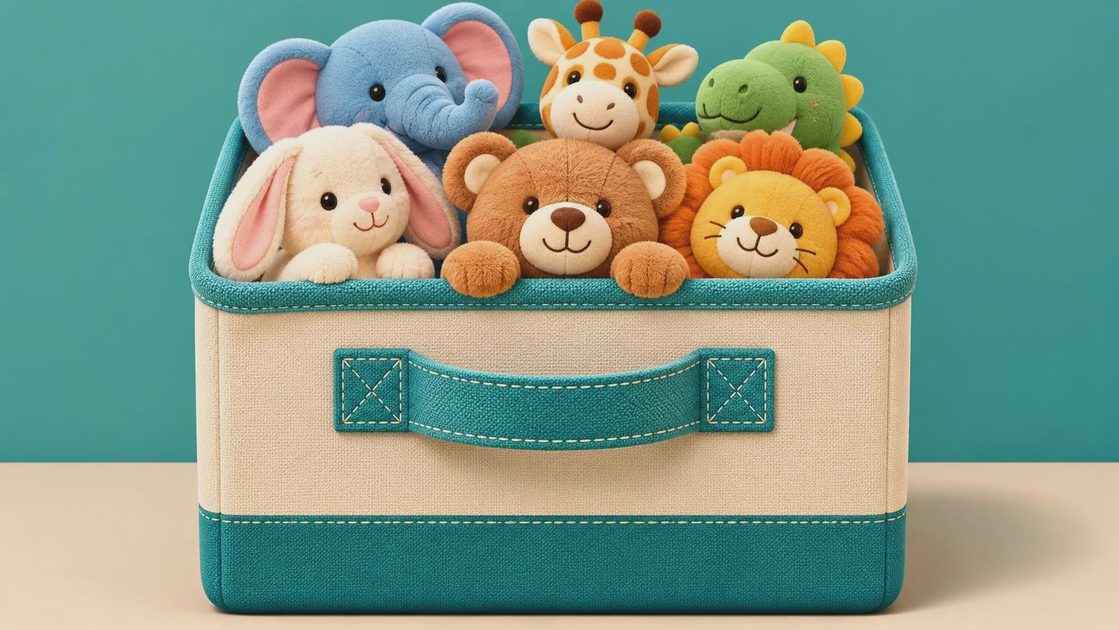
The best stuffed animal storage is usually the simplest: an open, washable basket at floor level for everyday favorites, plus a shelf or closed bin for the rest. It keeps the soft friends within reach without turning the whole room into a plush avalanche. You don't need a perfectly color-coordinated collection, either. A little texture and a few happy faces are part of the charm.
If you're shopping, start with IKEA's KALLAX line for a shelf-and-bin setup, Target's Brightroom line for flexible baskets and bins, or the Container Store for a wider range of container sizes. KALLAX suits a room with enough floor space for a furniture piece; Brightroom is a practical place to look for an easy drop-in basket; the Container Store is useful when you need to fit an awkward closet. Check dimensions and availability before ordering, because individual styles change.
Start with the toys, not the container
Gather the collection in one spot and separate the daily companions from the occasional visitors. This isn't a sneaky invitation to discard a child's favorite slightly flattened bear. The goal is to see how much space the toys actually need and which ones should be easiest to reach.
For everyday stuffed animal storage, choose a container that can hold the favorites without compressing them into a solid brick. An open top makes cleanup easier than a lid with a fussy latch. Measure both the space where the container will live and the opening it has to fit through; a basket that clears the closet floor but won't pass through the closet door is not the win we wanted.
Leave a little room at the top. It looks calmer, and it gives a child somewhere to toss a toy without needing an adult to rearrange the whole collection. For a big assortment, use two smaller containers rather than one enormous one: they're easier to move and make it simpler to find the rabbit at the bottom.
Baskets make the easiest everyday landing spot
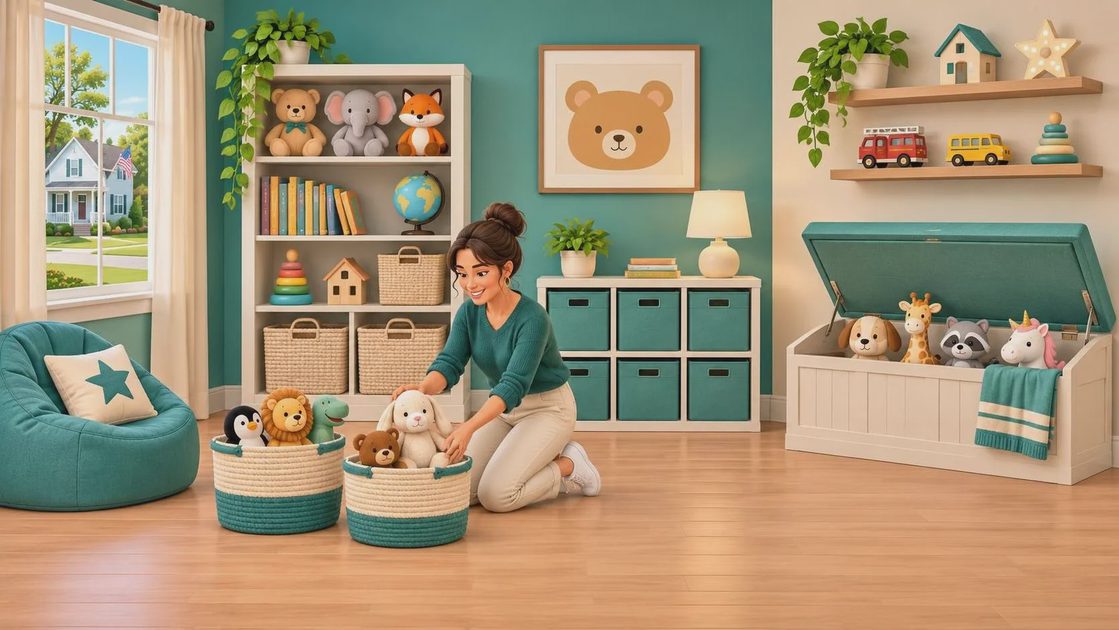
A soft-sided basket works beside a bed, under a low table, or in the corner of a living room. Look for a stable base and handles you can actually grip when the basket is full. Fabric bins are lightweight; woven baskets can bring lovely texture, but check for rough edges that could snag delicate plush fabric.
For a room that already has lots of color, I'd choose a basket in one of the quieter shades already present: oatmeal, muted green, or warm gray. That's not a rule about hiding toys. It's a way to let the collection be colorful without asking the container to compete for attention.
If the toys belong to more than one child, separate baskets can make putting things away less of a negotiation. Picture labels are helpful for children who aren't reading yet. Place the baskets where the toys are actually played with, even if that means the living room gets one too.
Use shelves for favorites worth seeing
A low shelf turns stuffed animal storage into a little display without making the room feel like a toy store. Sit a few favorites upright with space between them, then use a bin on the shelf below for the rest. That empty space matters: it gives your eye a place to rest and makes each toy easier to take down.
A cube shelf can also divide a collection by use: one open cube for bedtime companions, one bin for smaller toys, and another for dress-up accessories. Resist filling every opening just because it's there. A stack of books or one empty cubby can make the whole arrangement feel lighter.
Anchor furniture to the wall according to the manufacturer's instructions, especially anywhere a child might climb. Renters, ask your landlord about approved anchor installation rather than relying on a freestanding shelf to stay put. Keep toys within reach instead of encouraging climbing, and follow age-appropriate safe sleep guidance for babies; a crib is not the place to store plush toys.
Make a small room work harder
Under-bed bins are useful stuffed animal storage for toys that aren't needed every day. Measure the clearance from the floor to the lowest part of the bed frame, including any center supports, before choosing a bin. A zippered fabric bag can be easier to maneuver than a rigid box in a tight space. Make sure the toys are clean and completely dry before putting them away.
A toy hammock can free up floor space, but I'd treat it as display space rather than the main home for a child's favorites. High corners are difficult to reach, and a sagging net packed with animals can look busy instead of intentional. Install it securely according to its instructions, away from sleep spaces and anywhere cords or netting could pose an entanglement risk. For young children, a low basket is the simpler choice.
Closet shelves are another good option for rotating the collection. Keep a manageable group out and store the rest in a labeled bin. When interest shifts, swap a few toys rather than buying another organizer. There's no required rotation schedule; the point is to make room for play, not create a new household chore.
Choose materials you can care for
Before buying fabric stuffed animal storage, check whether the liner or entire container can be washed. A removable liner is handy when a basket itself can only be wiped clean. For individual toys, read their care labels: some can go through a gentle wash, while others need spot cleaning or more delicate handling. Let them dry thoroughly before returning them to a closed bin.
Avoid sealing damp toys away, and skip containers with heavy or locking lids where a child could become trapped. If dust is a concern, a washable covered bin outside a child's play area can protect less-used keepsakes. For particularly sentimental pieces, choose a clean, dry location away from direct sunlight, which can fade fabric over time.
The nicest setup isn't the one with the fewest toys showing. It's the one that makes the room easier to live in and leaves the well-loved creatures easy to find. Start with what you love. The rest finds its place.