Natural fabric softener is one of those small household swaps that can make laundry feel noticeably nicer without turning your hallway into a perfume counter. I started looking for alternatives after a strongly scented product made my towels smell like artificial flowers for an entire week. My rescue cat, Saffron, was unimpressed, and honestly, neither was I. The goal is simple: soft clothes, fewer unnecessary ingredients, and a clean scent that does not compete with your home.
I am not a chemist or a professional cleaner. I am a designer who has lived through three rentals, one condo, a tiny laundry closet, and more than one load of pink-tinged whites. These are practical options I have tried or researched carefully, along with the places where each one works best.
What a natural fabric softener actually does
Traditional liquid softeners coat fabric fibers with lubricating ingredients, which creates that slippery, soft feeling. Some formulas also reduce static and add fragrance. The tradeoff is that the coating can build up on towels, athletic clothing, microfiber cloths, and anything designed to absorb moisture. A towel that feels silky but takes forever to dry is not exactly a laundry victory.
A natural fabric softener aims for a lighter touch. It may soften fibers through mild acidity, gentle mechanical movement, or a small amount of plant-based conditioning ingredients. The result is often less dramatic than a heavily fragranced conventional formula, but that is part of the appeal. Your sheets should smell clean, not announce themselves from the bedroom doorway.
The phrase natural is not regulated in one universal way, so read the ingredient panel instead of trusting the front label. Look for a short list, clear usage directions, and no fragrance if you are sensitive to scent. Plant-derived ingredients can still irritate skin, and concentrated formulas should never be poured directly onto clothing.
The easiest option: distilled white vinegar
Distilled white vinegar is the old pantry standby. Used in the rinse compartment, it can help rinse away detergent residue and leave fabrics feeling less stiff. The smell generally disappears as the laundry dries, although I would not add it directly to a load with baking soda because the two neutralize each other and create a fizzy science fair rather than useful cleaning power.
Start with about one-quarter to one-half cup in the fabric-softener dispenser, depending on your machine size and the hardness of your water. Do not pour vinegar straight onto dry fabric, and never mix it with chlorine bleach. That combination can create dangerous fumes. Vinegar is also not a miracle stain remover or a substitute for detergent; it simply has a supporting role in the rinse cycle.
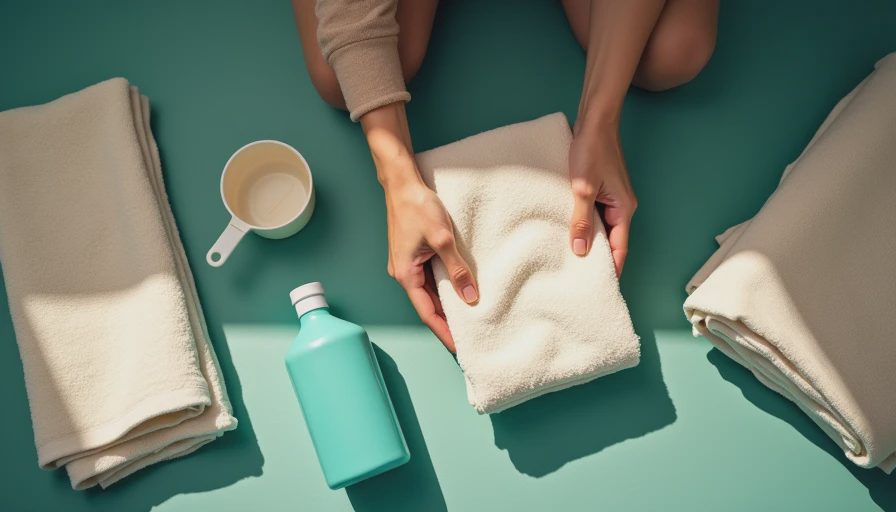
I use vinegar most often for cotton sheets, everyday T-shirts, and kitchen towels. I skip it when washing delicate silk, specialty finishes, or anything with care instructions that specifically prohibit acidic products. If your machine manual gives different guidance, the manual wins.
Wool dryer balls: the softening method with no liquid
Wool dryer balls are my favorite natural fabric softener for a very practical reason: they live in the dryer and require almost no thought. As they tumble, they separate clothing, improve airflow, and gently knock against fibers. That can reduce drying time and soften clothes without adding a coating.
A set of three to six balls usually costs about $10 to $25 and can last for hundreds of loads. The savings are not dramatic on one Tuesday laundry day, but they add up when you stop buying disposable dryer sheets. They also avoid the waxy residue that can transfer to towels and moisture-wicking workout clothes.
The limitation is static. Dryer balls may help, but they cannot defeat every dry winter day, especially in homes with forced-air heat. Avoid overloading the dryer, remove clothes while they are just dry, and consider lowering the heat. If static remains a problem, a reusable anti-static option may be more useful than adding fragrance.
Choose tightly felted wool balls with no loose strings or strong chemical smell. If you have a wool allergy or prefer a vegan household, look for rubber or silicone alternatives, though their performance and longevity vary.
Store-bought natural fabric softener options
If you prefer a liquid product, several brands sell plant-based or fragrance-free fabric conditioners. Seventh Generation, Molly's Suds, and ECOS are familiar names in natural-leaning laundry aisles, while smaller brands often offer unscented formulas online. I am not loyal to one bottle; I look for transparent ingredients, recyclable packaging, and directions that make sense for my machine.
Prices often range from about $8 to $18 per bottle, with the cost per load depending on concentration. Compare that number rather than the sticker price. A $12 concentrated bottle used at one tablespoon per load may last longer than a $9 product requiring a quarter cup.
A good natural fabric softener should not leave towels greasy, make athletic clothing repel water, or create a heavy scent that lingers after washing. Test a new product on a small load first. Your favorite linen napkins are not the place for an experiment involving a mysterious botanical fragrance.
What to use for different fabrics
Cotton bedding usually responds well to vinegar in the rinse or wool dryer balls. For towels, use less detergent than you think you need, skip conventional softener, and make sure the load has enough room to move. Overstuffed towels often feel rough because they never rinse or dry properly.
For activewear, I usually choose wool dryer balls and a mild detergent. Many performance fabrics rely on their ability to move moisture, and softener residue can interfere with that function. Microfiber cleaning cloths also need to stay absorbent, so wash them separately and avoid coating products.
Delicates deserve a gentler plan. Follow the care label, use a mesh bag when appropriate, and air-dry pieces that could stretch or lose shape. A natural fabric softener is not automatically safe for every fiber simply because the ingredients sound wholesome.

My simple laundry routine
I sort by color and fabric weight, not by an elaborate system that requires a spreadsheet. I measure detergent carefully, because excess soap can leave clothes stiff and dull. I add vinegar to the rinse compartment when washing sturdy cottons, or I use wool dryer balls when the load is headed for the dryer. Then I leave enough space for everything to tumble freely.
Once a month, I clean the washer gasket, wipe the detergent drawer, and run the machine’s cleaning cycle if it has one. A musty washer can make even the best natural fabric softener seem ineffective. I also clean the dryer lint screen every time; it is a tiny habit with a meaningful safety benefit.
If I were setting up a laundry shelf from scratch, I would buy a $15 set of wool dryer balls, keep a small bottle of distilled white vinegar on hand, and reserve liquid conditioner for loads that truly need it. That combination costs less than constantly replacing specialty products and gives me options for different fabrics.
The best choice is the one that fits your laundry, your skin, and your tolerance for extra steps. Start with what you love. The rest finds its place.