For years, my apartment looked like a chaotic yard sale that had politely decided to live indoors.
I’d buy a throw pillow because I loved the color, a rug because it was on sale, and a lamp because I needed light. None of them spoke to each other. My living room felt busy, disjointed, and exhausting to look at—like a jigsaw puzzle where half the pieces belonged to a different box.
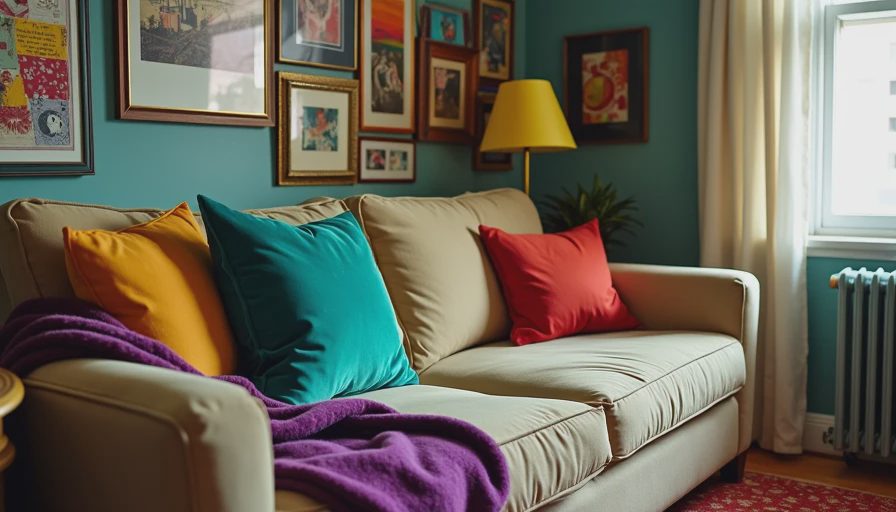
I thought I just lacked "natural taste." But as a graphic designer, I eventually realized the mistake I was making: I was trying to decorate with an infinite color palette. In design, freedom is actually the enemy of harmony. When you give yourself permission to use every color you love in a single room, you end up with visual noise.
Then I started applying a simple rule I use in branding and visual hierarchy every single day. It completely changed how I decorate, and it will change your space, too.
What Is the 3-Color Rule?
It’s exactly what it sounds like. When you are building the palette for a room, you limit your core color story to three distinct roles:
The Anchor (60%): The dominant backdrop. This is your walls, your large furniture (like a sofa or large rug), and major structural pieces. It should be neutral and quiet, giving the eye a place to rest.
The Catalyst (30%): The supporting player. This carries the weight of your room's personality—curtains, accent chairs, secondary rugs, or medium-sized wood tones. It bridges the gap between your anchor and your focal accents.
The Focus (10%): The star of the show. This is your punch of character. Think throw pillows, art pieces, ceramics, or a statement blanket. It’s small in footprint, but high in impact.
When you stick to these three buckets, magic happens: your brain stops trying to process a dozen competing elements, and the room suddenly feels intentional, calm, and designed.
Putting It Into Practice: My Living Room Breakdown
To show you how this works in real life, let’s look at my current Princeton apartment living room. (No showroom staging here—this is where I drink coffee and my cat, Saffron, sheds on the rug.)
The Anchor (60%): Warm Cream & Soft Oatmeal. My walls are a soft, warm off-white, and my large area rug is a faded, low-pile oatmeal neutral. It sets a quiet, breathing backdrop that makes the 700-square-foot space feel instantly bigger.
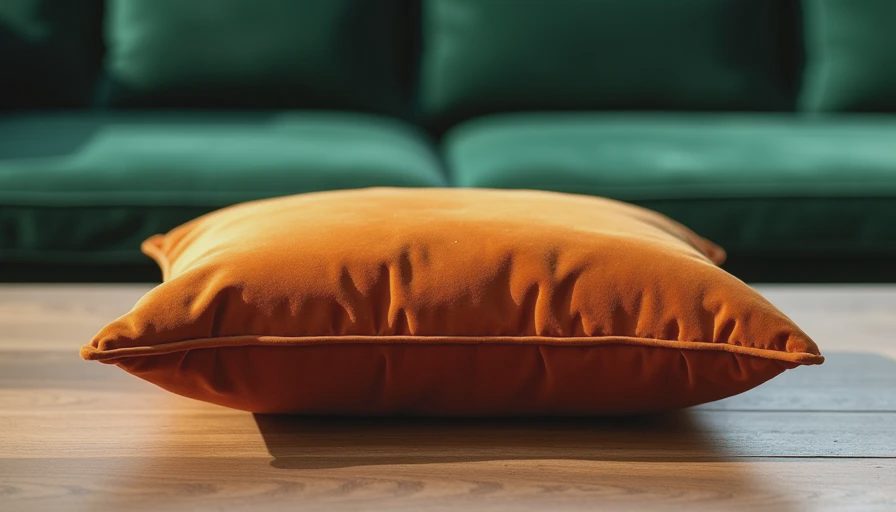
The Catalyst (30%): Warm Walnut & Olive Green. This is where the room gets its bones. My mid-century coffee table ("Stan") brings in rich walnut wood tones, and my beloved green velvet sofa ("Olive") acts as the primary color anchor. These two elements talk to each other without screaming for attention.
The Focus (10%): Burnt Orange. Remember that single velvet throw pillow that started my entire decorating journey years ago? It lives here. Paired with a couple of amber glass vases on the shelf, this burnt orange acts as the 10% spark that draws the eye across the room and wakes up the entire palette.
That’s it. Three color families, assigned distinct roles. No guesswork.
Why This Works (Even on a Budget)
The best part about the 3-Color Rule isn't just that it looks good—it's that it saves you money.
When you go shopping without a framework, you buy random things that look pretty on a shelf. When you shop with a strict 3-color framework, you have an instant filter for every purchase.
Does that cute blue vase fit into my 60-30-10 ratio? No? Then back on the shelf it goes, saving me $35 and preventing another clutter pile at home.
Are my curtains fighting my sofa? Check your catalyst and focus layers. Usually, a room feels "off" simply because too many elements are fighting for the 10% focus spot.
Your Turn: How to Diagnose Your Room Today
If your room feels restless or unfinished, walk in right now and try this quick diagnostic exercise:
Take a photo on your phone. (Sometimes looking at a flat image reveals the chaos faster than standing in the room.)
Identify your Anchor: What is taking up the most visual space? Is it neutral, or is it loud?
Count your competing colors: If you have teal curtains, a red accent chair, a yellow pillow, and a purple blanket all fighting for attention, pick your favorite and pack the rest away.
Build outward: Start with one piece you love unconditionally (your 10% focus), assign its supporting cast (your 30% catalyst), and let the room breathe against a quiet backdrop (your 60% anchor).
You don't need a professional interior design degree to make your home feel like a sanctuary. You just need boundaries.
"Start with what you love. The rest finds its place."