A good table centerpiece can be as simple as a low bowl of fruit and a clipping from the yard. The trick is choosing something that looks lovely when you're not eating and doesn't have to be dismantled when dinner arrives. Start with a piece you already love, give it a little breathing room, and add one or two things with different heights or textures. No florist, matching set, or elaborate tablescape required.
Start with the shape of your table
For a round table, I'd begin with one substantial object in the middle: a bowl, a short vase, or a small tray holding a few pieces. A single grouping echoes the shape of the table and leaves the edges clear for plates. On a rectangular table, a longer arrangement feels natural, but it doesn't need to run from end to end. Try a low vessel with a smaller object on either side, leaving enough room for serving dishes.
Scale matters more than a precise formula. Put your plates and glasses out first, then set the table centerpiece in the space that's left. If a chair has to be pulled back so someone can reach a fork, the arrangement is too wide. If you have to peer around a vase to see the person across from you, it's too tall for a meal.
For a small apartment table that doubles as a desk, a tray is your friend. It turns several little objects into one thing you can lift out of the way. Choose a tray with a stable, flat bottom, and don't overload it with anything wobbly or full of water.
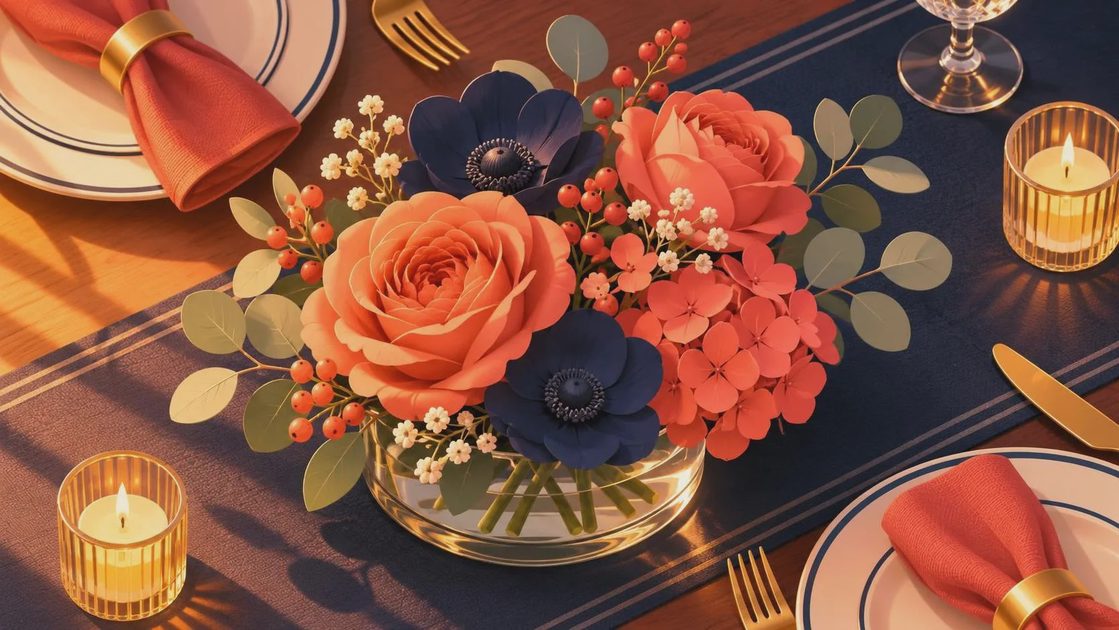
Build a table centerpiece from what you own
Look in your kitchen cabinets before you go shopping. A ceramic serving bowl, a glass pitcher, or a wooden board can anchor an arrangement. I like starting with the object that has the most personality, then letting the supporting pieces stay quieter. Think of it like getting dressed: the patterned jacket gets to be the interesting part; everything else doesn't have to compete.
A bowl of lemons or apples brings color without requiring another decorative purchase. Set it directly on the table, or place it on a folded cloth napkin for a softer edge. Use fruit you'll actually eat, and check underneath regularly so a bruised piece doesn't surprise you or mark the surface.
A pitcher with a few leafy stems gives you height and movement. Cut the stems short enough that people can talk over them, and change the water when it gets cloudy. Garden clippings can be beautiful, but identify plants before bringing them inside if you have pets. Some common flowers and foliage are toxic to cats and dogs; skip anything you're unsure about.
For a table centerpiece with no upkeep, try a favorite bowl beside a stack of cloth napkins and a small sculptural object. A handmade pottery piece or an interesting thrifted find gives the grouping a little character. Leave visible space between the objects so they read as a collection rather than a pile waiting to be put away.
Bring in color and texture
If the room already has a color you love, repeat a little of it on the table. A rust-colored napkin can pick up a warm-toned pillow; a green bowl can echo the leaves of a nearby plant. Repeating a color doesn't mean matching it exactly. Close cousins often feel more relaxed than a perfectly coordinated set.
Texture does just as much work as color. Pair smooth glass with a nubby cotton runner, or a matte ceramic vessel with a polished wood table. If your tabletop has a beautiful grain, let some of it show. That open space is part of the design, not a gap you forgot to fill.
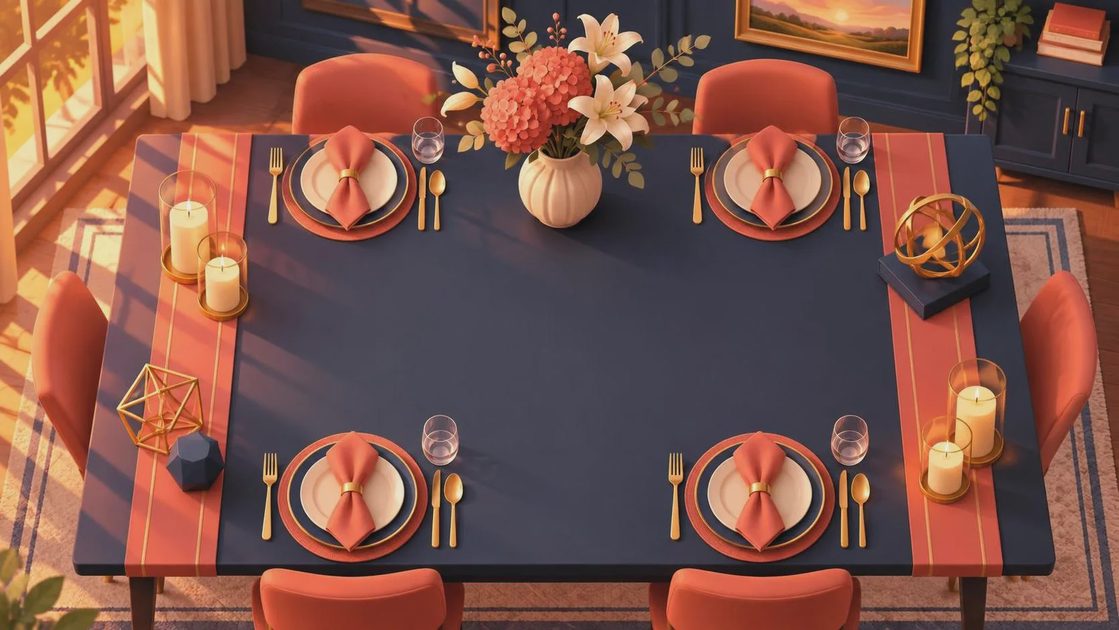
A runner can help a table centerpiece feel grounded, particularly on a long table. Try a folded length of washable fabric or a runner you already have; it doesn't need to be a special-occasion linen. Check care instructions before putting damp vases or food on it, and use a waterproof saucer or coaster under vessels to protect the table from moisture.
Make it work for real life
The loveliest arrangement is one you aren't constantly negotiating around. If the table is where mail lands, homework happens, and dinner gets served, keep the footprint small and the pieces easy to move. A sturdy bowl is often a better everyday choice than three delicate vases balanced on a narrow board.
For gatherings, set the table with the actual serving dishes before adding decorations. A few short stems in a small vessel may be all the color you need once the food is out. Unscented candles can be lovely, too, but keep flames away from foliage, fabric, children, and pets. Battery-operated candles are an easier option when the table is crowded or curious paws are involved.
If you like changing things with the seasons, keep the same base and swap one element: apples for citrus, fresh stems for a favorite small object, or a light napkin for a deeper color. You get a different mood without storing a box of decorations for every holiday.
A simple finishing check
Sit down in each chair and look across the table. Can you see the other seats? Is there space to put down a glass without nudging something over? Remove one object if the answer is no. Then take a step back and notice whether your eye has somewhere to rest. A little empty tabletop makes the pieces you kept feel more intentional.
Your table centerpiece doesn't need to look like anyone else's dining room. A thrifted bowl, a cloth napkin, and fruit from the grocery run can be enough. Start with what you love. The rest finds its place.