If you're wondering how to build a raised garden bed, start with a simple bottomless wooden box: four boards screwed together, set on level ground, and filled with good soil. A 4-by-8-foot bed gives you plenty of growing room without making the middle impossible to reach. You don't need fancy joinery or a Pinterest-perfect backyard; you do need a sunny spot, a drill, and a little room around the edges.
Pick a spot before you buy the wood
For most vegetables, look for a place that gets at least six hours of direct sun a day. Watch where shadows fall from fences, trees, and buildings, and choose a spot close enough to a hose that watering won't become a daily annoyance.
Leave room to walk and work around the bed. About two feet of clearance is comfortable for many gardeners; allow more if you need to maneuver a wheelchair or garden cart. A 4-foot width lets most people reach the center from either side, but choose a narrower box if it will sit against a fence or wall.
Renters, check with your landlord before digging, removing grass, or installing anything permanent. A bottomless bed belongs on the ground, not directly on a balcony: wet soil is heavy, and a deck or balcony needs a structural assessment before it supports that kind of load. A few lightweight containers are a much simpler rental-friendly choice.
What to buy for a simple 4-by-8 bed
For a box roughly 11 inches tall, use two untreated 2-by-12 boards, each 8 feet long. Have the store cut one board into two 4-foot pieces, or cut it yourself. You'll also need exterior-rated screws, a drill and driver bit, a tape measure, a level, and a shovel or garden fork. Pilot holes help prevent the wood from splitting; a second person makes holding the corners together easier.
Cedar is naturally rot resistant and has a lovely warm color, but untreated pine or fir can be a more budget-friendly choice. Expect untreated softwood to break down sooner in damp soil. Skip old railroad ties and mystery salvaged lumber, especially for an edible garden, because you don't know what may have been used to treat them.
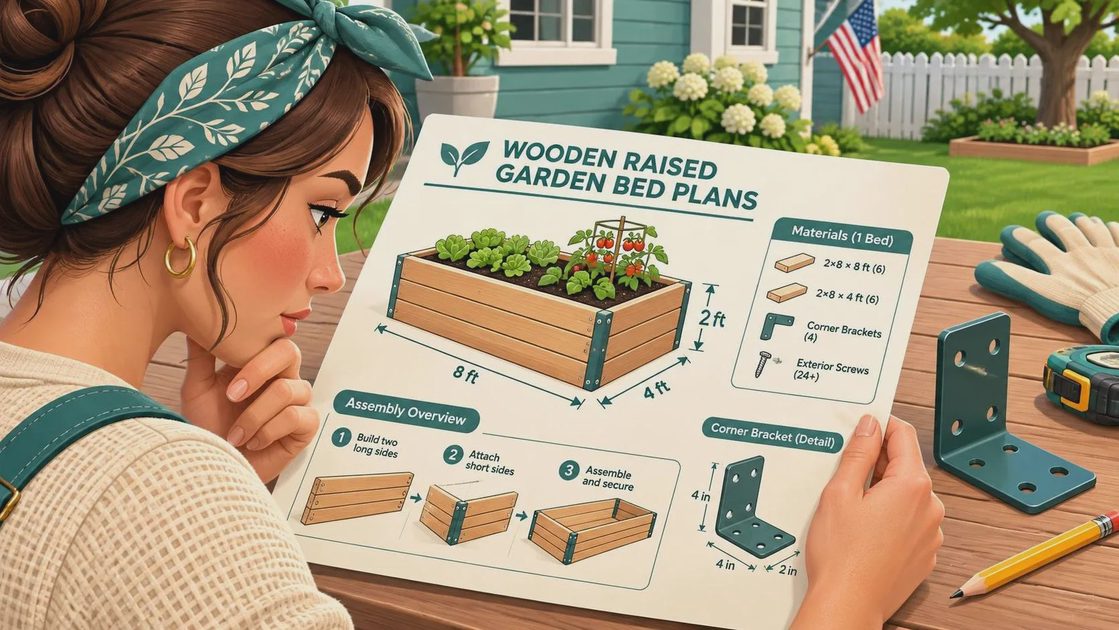
Lumber is sold by nominal dimensions: a 2-by-12 is typically about 1½ inches thick and 11¼ inches wide. That means your finished box won't measure exactly 4 by 8 feet inside. That's perfectly fine; the plants aren't checking your math. Buy by the board size and cut lengths, rather than trying to make the interior dimensions exact.
How to build a raised garden bed step by step
Set the two long boards parallel on edge. Fit the two short boards between their ends to form a rectangle. The long sides will cover the ends of the short sides. Check that the corners meet squarely, drill pilot holes through the long boards into the ends of the short ones, and drive three exterior screws into each corner. Use screws long enough to pass through the outside board and grip the end of the other without poking through its inner face; approximately 3-inch exterior wood screws are a practical starting point.
Move the box into position, then check it with a level across its width and length. If the ground slopes slightly, remove soil from the high spots rather than propping up a corner and leaving a gap beneath it. A level top makes watering more even and gives the finished bed that calm, intentional look I love.
Remove grass and persistent weeds from inside the frame. Loosen the ground underneath with a garden fork if it's compacted, so roots and water can move below the bed. You can place a single layer of plain, tape-free cardboard over short grass as a weed barrier, but remove thick turf and stubborn perennial weeds first. Wet the cardboard before adding soil; it will break down over time.
Leave the bottom open to the earth. Landscape fabric underneath can interfere with roots reaching the soil below, and a layer of gravel at the bottom isn't necessary for drainage. If burrowing animals are a problem, attach galvanized hardware cloth to the underside before positioning the frame, folding sharp edges inward and wearing gloves.
Fill it without guessing at the soil
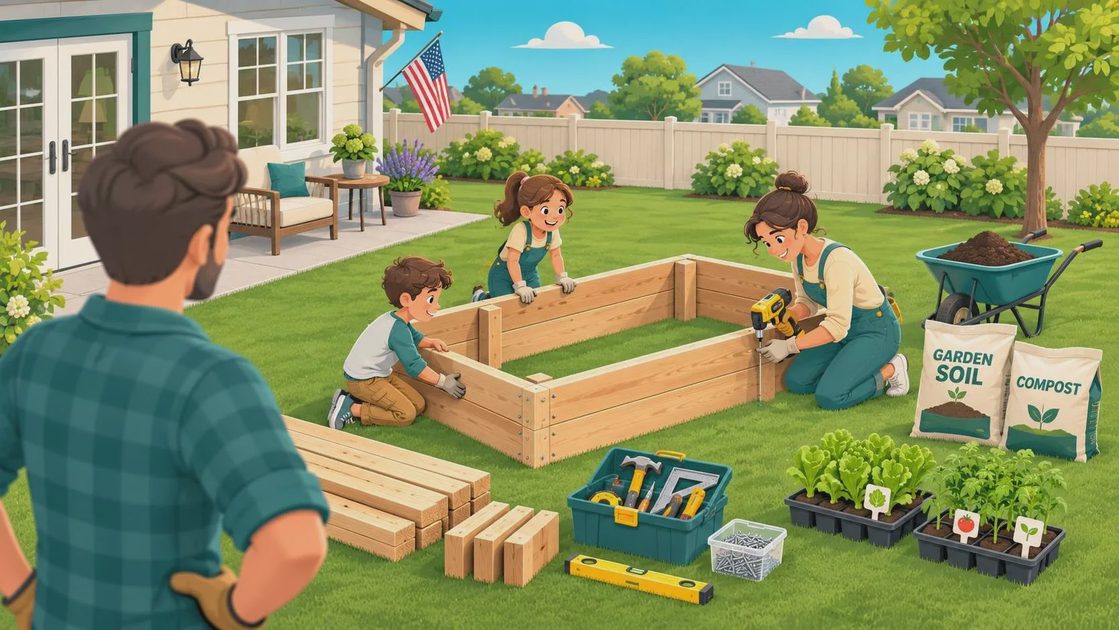
A nominal 4-by-8-foot bed filled to roughly 10 inches deep takes about 24 to 27 cubic feet of soil, depending on the actual inside dimensions. That's approximately one cubic yard. Soil settles, so plan to top it up later rather than packing it down hard.
Choose a soil blend sold for raised beds, or combine good-quality topsoil with finished compost. The goal is a loose, crumbly mix that holds moisture but doesn't stay soggy. Don't fill the box entirely with compost: it can settle substantially and may contain more nutrients than plants need. Avoid using straight garden soil if it's dense clay, since it can compact in the bed too.
Bagged soil is easy to carry in stages; bulk delivery can make sense if you're filling several beds. Compare the total volume and delivery charge before choosing. Bag sizes vary, so divide your needed cubic feet by the volume printed on the bag to find your count. A tarp in the driveway keeps a bulk pile a little less chaotic.
If you're concerned about contamination in the ground, particularly near an older building or a formerly industrial area, consider a soil test and local guidance before growing food. A raised frame alone doesn't guarantee that underlying soil is safe, especially where roots can reach it.
Plant, water, and make it yours
Water the filled bed thoroughly before planting. Start with something you'll actually cook: lettuce, herbs, bush beans, or a tomato plant if you have the space and sun. Follow the spacing on seed packets or plant tags; those small seedlings get bigger faster than the tidy nursery tray suggests. Tomatoes may need a sturdy support installed early, before roots spread.
A thin layer of untreated mulch, such as straw or shredded leaves, can help the surface retain moisture. Check the soil regularly and water when the top inch feels dry, adjusting for rain and the plants you're growing. Water at the base rather than giving the leaves a quick sprinkle.
For a prettier finish, repeat one material or color nearby: a terracotta pot, a gravel path, or a simple wooden trellis. Leave some breathing room around the bed instead of filling every corner. Start with what you love. The rest finds its place.